
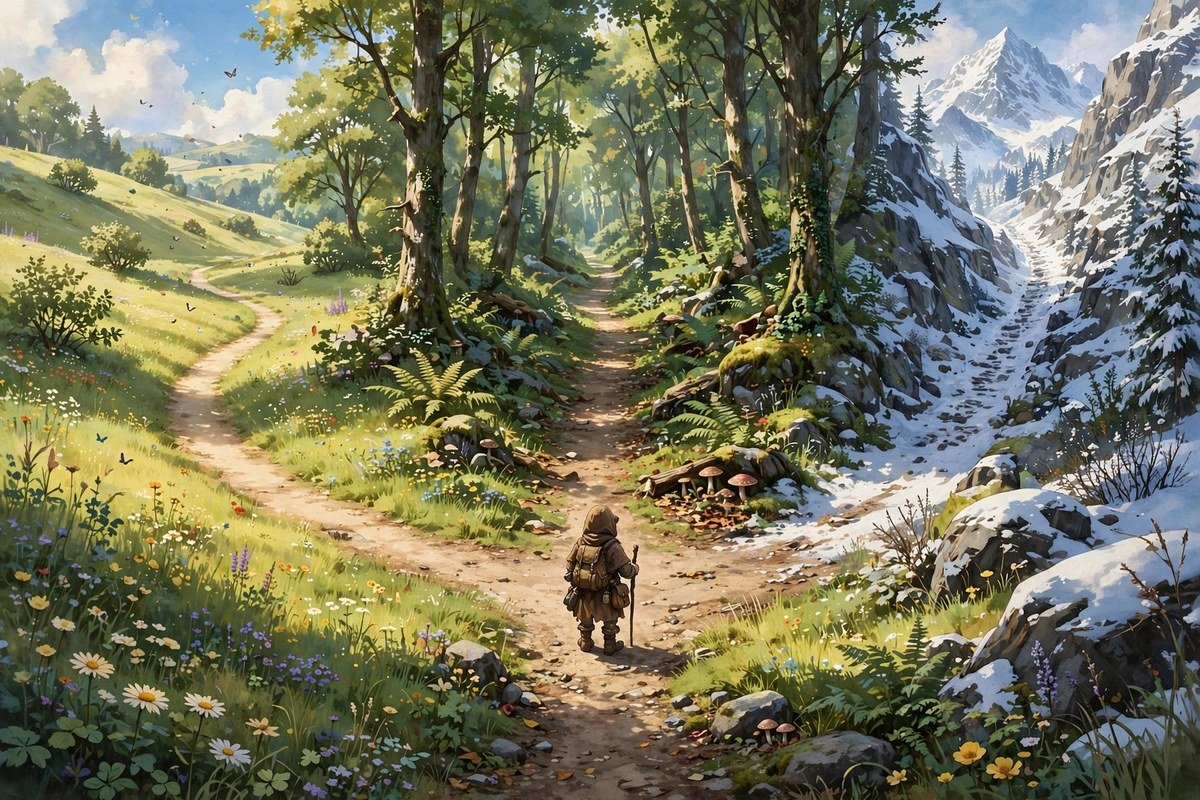
Every game with a difficulty setting asks you a question before you have played a single second: how hard do you want this to be? And most players answer it badly — not because they do not know the answer, but because they answer a different question instead. They pick the difficulty that sounds impressive, or the one they think a good player would pick, or the one they picked last time, when they were better, or younger, or less tired. The result is a game that is too hard to enjoy or too easy to care about, and a player who blames the game for a choice they made in five seconds.
1. The Right Difficulty Is the One Where You Win Sometimes
There is a simple rule for choosing difficulty, and it has nothing to do with pride. The right difficulty is the one where you win sometimes and lose sometimes — roughly half and half, if you are keeping count. Win every time and the game is a chore. Lose every time and the game is a punishment. Win half the time and the game is a game: tense enough to matter, forgiving enough to keep playing.
This is worth knowing because the feeling of a well-chosen difficulty is distinctive. The game is hard enough that a win feels earned, and easy enough that a loss feels like a lesson rather than an insult. You finish a session wanting one more round, not needing a break. That feeling — engaged but not exhausted — is the sign you have chosen well, whatever the label on the setting says.
The label itself is almost meaningless. "Easy" in one game is harder than "Normal" in another, and "Hard" in a puzzle game is a different thing from "Hard" in an action game. Ignore the words. Play a few rounds, notice how often you win, and adjust until the balance feels right. The setting is a tool, not a test. Use it like one.
2. Your Difficulty Should Change With Your Day
The second thing players get wrong is treating difficulty as a fixed part of who they are. "I play on Hard" becomes an identity, and changing it feels like a confession. It is not. Difficulty is a setting for a moment, not a statement about a person — and the right setting on a fresh Saturday morning is not the right setting on a tired Tuesday evening.
Think about it practically. After a long day at work, your reactions are slower, your patience is thinner, and the game that was a fair challenge in the morning is a frustrating one at night. Turning the difficulty down in the evening is not giving up. It is choosing the version of the game that fits the player you are right now, rather than the player you were this morning. The game does not mind. The score does not mind. The only thing that minds is pride, and pride is a poor reason to ruin an evening.
The same applies in the other direction. When you are sharp, rested, and playing well, turn the difficulty up. The game you have mastered on one setting is a different game on a harder one — faster, less forgiving, more demanding — and the challenge is what makes it interesting again. A game that grows with you is a game you keep playing. A game frozen at one difficulty is a game you outgrow.
3. Changing Difficulty Is Not Failing
There is a particular kind of player who would rather lose ten times on Hard than win once on Normal, because winning on Normal feels like cheating. It is not cheating. It is playing the game at the level where it is fun, which is the only level that matters. The difficulty setting exists because players are different, days are different, and moods are different. Using it is not a failure of skill. It is the skill — the skill of knowing what you need from a game right now and choosing accordingly.
The best players are not the ones who always play on the hardest setting. They are the ones who adjust: harder when they want a challenge, easier when they want to relax, and somewhere in the middle most of the time. They treat difficulty the way a driver treats gears — not as a measure of worth, but as a choice that fits the road.
The next time a game asks you how hard you want it, answer honestly. Not the answer that sounds impressive. The answer that fits today, this hour, this mood. Play a few rounds. If you win every time, turn it up. If you lose every time, turn it down. The right difficulty is the one where the game is a game — and you will know it when you feel it, because it is the one that makes you want to play one more round.
6. The Difficulty Diary: Learning What Your Settings Say About You
There is a quiet piece of information hiding in your difficulty settings, and it is worth paying attention to. The setting you choose — and how often you change it — says something about how you play, what you enjoy, and what you are avoiding. A player who always plays on the hardest setting and loses constantly is not necessarily brave. They may be afraid of what an easier setting would say about them. A player who always plays on the easiest setting is not necessarily lazy. They may have learned that easy is where the fun lives, and they are right.
The useful habit is to notice the pattern without judging it. For one week, keep a small note of the difficulty you chose each session and how you felt afterwards. Not the score — the feeling. Was the session tense or relaxed? Frustrating or satisfying? Did you want to play again, or were you glad it was over? After a week, the pattern will tell you something honest about what you actually enjoy, as opposed to what you think you should enjoy.
Most players discover a gap between the two. The difficulty they think they should play on is harder than the difficulty they actually enjoy — and the enjoyment is the point, not the setting. Closing that gap is not giving up. It is the opposite: it is choosing the game you actually want to play, instead of the game you think you ought to want. The diary does not lie, because the feelings do not lie. They are the data, and the data says what it says.
Try it for a week. One note per session: the setting, and one word for how it felt. At the end of the week, look at the words. The setting with the best words is your difficulty — not the one that impresses anyone, not the one you think a good player would choose, but the one that makes you want to play again tomorrow. That is the only measure that matters, and it has been yours all along.
6. The Setting You Will Thank Yourself For
There is a setting you will thank yourself for choosing, and it is not the one that impresses anyone. It is the one that makes you want to play again tomorrow. You will know it by a simple sign: at the end of a session, you feel satisfied rather than drained, and the thought of playing again feels like a pleasure rather than an obligation. That feeling is the whole purpose of the setting, and it is worth more than any label.
So the next time a game asks you how hard you want it, ignore the words on the buttons. Think about the evening ahead, the energy you have, and the mood you are in. Choose the setting that fits those things, play a few rounds, and adjust if the balance feels wrong. There is no prize for playing on Hard, and no penalty for playing on Easy. There is only the game, the evening, and whether you enjoyed both. Choose the setting that makes the answer yes — and let the rest take care of itself.